
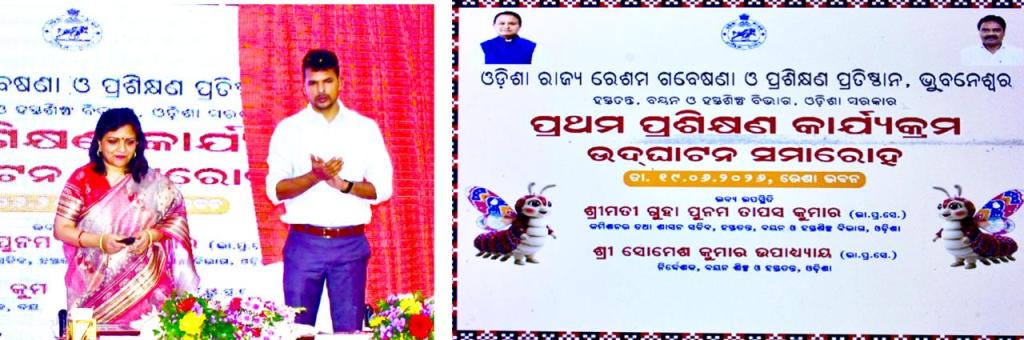
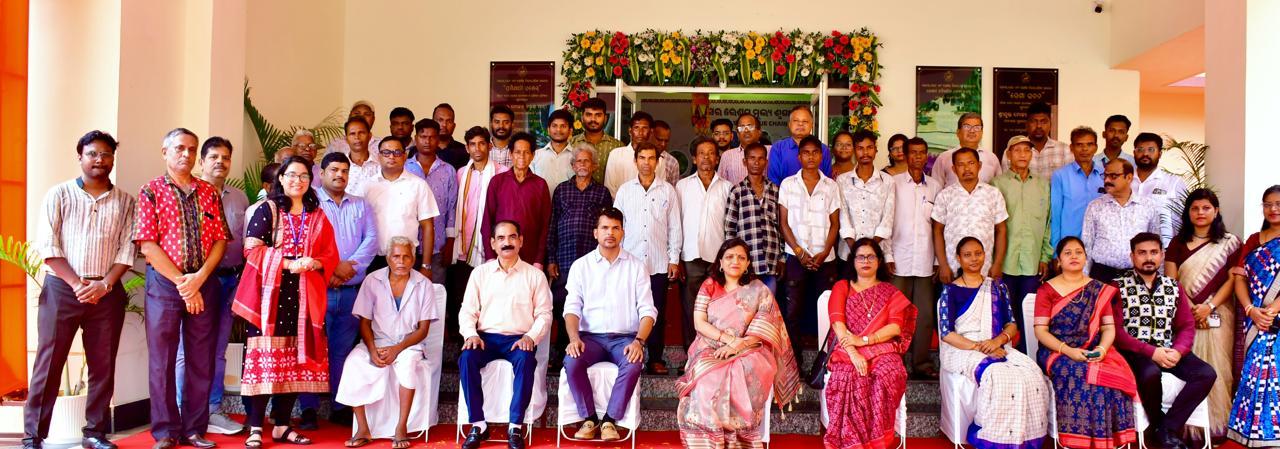
Paperman Media ( Bhubaneswar )- The Odisha State Sericulture Research and Training Institute (OSSR&TI) has organized its first Farmers’ Training Programme on “Tasar Host Plant Nursery and Its Management” from 19 June to 23 June 2026.
The institute’s state-of-the-art training facility, “Resha Bhavan,” was inaugurated on 24 February 2026 during the grand Toshali National Crafts Mela held at Janata Maidan, Bhubaneswar.
The inaugural session of the training programme was graced by Guha Poonam Tapas Kumar, Commissioner-cum-Secretary, Handlooms, Textiles and Handicrafts Department, as the Chief Guest. While inaugurating the programme, she highlighted that sericulture is a year-round livelihood activity that provides farmers with a sustainable and profitable source of income.
She stated that nearly 15,000 traditional families, comprising around one lakh people, are actively engaged in sericulture in Odisha. India produces four varieties of silk—Mulberry, Tasar, Eri, and Muga—which differ in terms of host plants, life cycle duration, cocoon and silk quality, size, weight, structure, colour, and strength.
Tasar cultivation is a traditional agricultural activity in Odisha. More than 46,828 Scheduled Tribe and Scheduled Caste families are engaged in Tasar cultivation across 14 hilly districts of the State, namely Mayurbhanj, Balasore, Keonjhar, Sundargarh, Deogarh, Sambalpur, Dhenkanal, Angul, Jajpur, Boudh, Sonepur, Kalahandi, Nuapada and Nabarangpur. Every year, over 50,000 Tasar cocoons are produced, generating approximately ₹6 crore in income for tribal farmers with minimal investment in seed material.
Eri culture is another traditional sericulture activity in Odisha and is practiced in districts such as Cuttack, Kendrapara, Jagatsinghpur, Nayagarh, Khordha, Dhenkanal, Angul, Sambalpur, Keonjhar, Kalahandi, Koraput, Rayagada, Gajapati, Kandhamal and Sundargarh. Eri cultivation is carried out on nearly 1,000 acres of land, benefiting around 2,000 farmers. Annually, about 7 metric tonnes of Eri cocoons are produced, valued at approximately ₹14 lakh.
Mulberry sericulture is also a traditional activity in Odisha and is practiced in 12 districts, including Gajapati, Rayagada, Koraput, Kandhamal, Kalahandi, Sonepur, Deogarh, Sambalpur, Nayagarh, Khordha, Keonjhar and Mayurbhanj. The State produces an average of 40,000 kilograms of Mulberry cocoons every year, enabling nearly 1,000 Scheduled Tribe and Scheduled Caste farmers to earn around ₹50 lakh annually.
Highlighting the Odisha Government’s multifaceted initiatives, the Commissioner-cum-Secretary informed participants about the Government’s commitment to the welfare of sericulture farmers. Efforts are underway to establish serisheds for cocoon rearing, introduce insurance coverage for sericulture farmers, and provide special hostel facilities and training opportunities for women sericulturists. She further stated that the Government aims to revive the spinning unit at Bhagamunda, Keonjhar.
Expressing gratitude to the farming community, she noted that Odisha secured the first position in the Sericulture Review conducted by the Central Silk Board, a feat made possible through the dedication of the State’s sericulture farmers.
On this occasion, Somesh Kumar Upadhyay, Director of Textiles and Handlooms, stated that under the Chief Minister’s Sericulture Development Scheme, the Government plans to invest ₹274 crore over the next five years for the development of all four varieties of silk in the State.
He further informed that 11 training programmes will be organized within a year to provide training in the mother tongue to 165 beneficiaries.
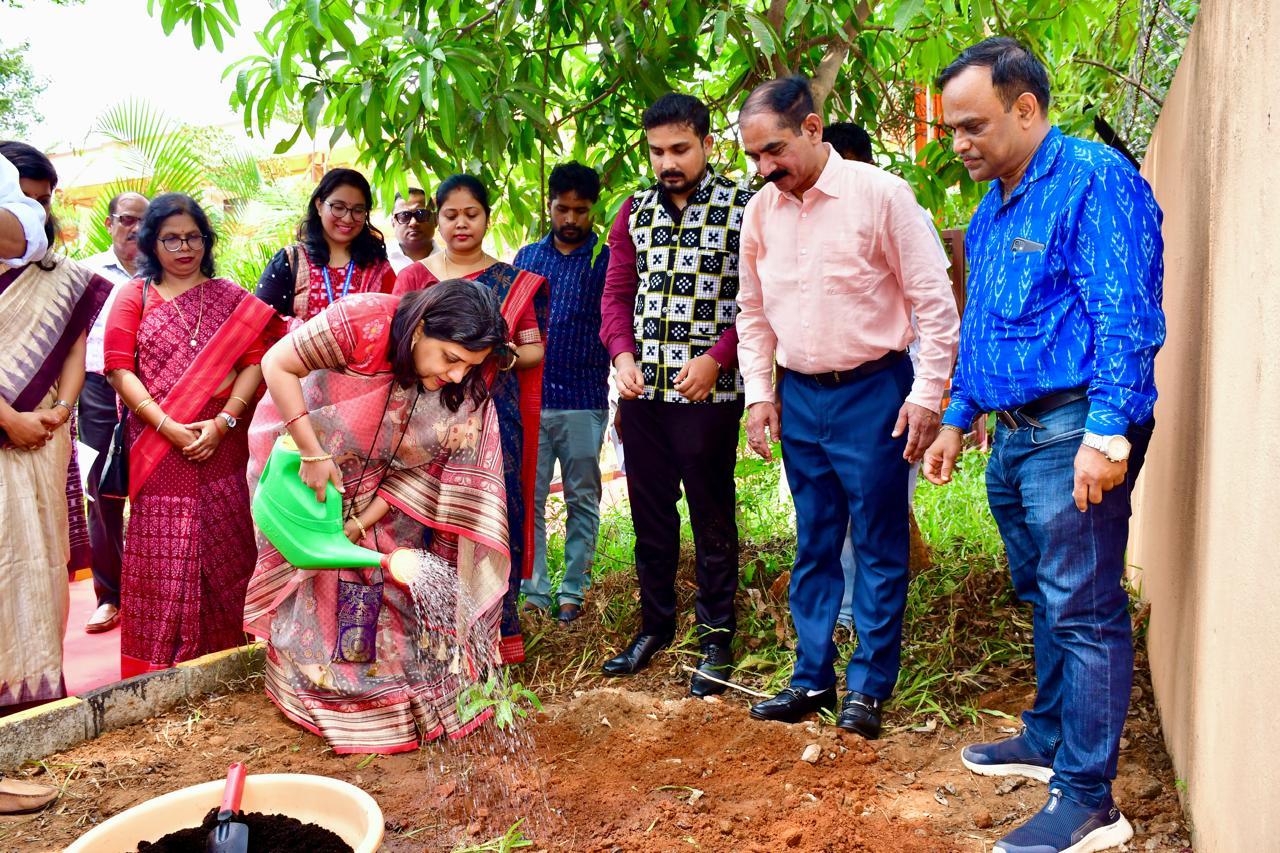
An audio-visual presentation was also screened, showcasing Karuna Silk, Amlan Karuna Silk Showroom, Puri, and the Tasar Silk Park at Keonjhar. The Commissioner-cum-Secretary and the Director of Textiles and Handlooms also participated in a plantation drive under the “Ek Ped Maa Ke Naam” campaign.
The dignitaries visited the exhibition organized on the occasion and held discussions on technologies such as the Buniyad Reeling Machine and Motorised Spinning Machine.
At the conclusion of the programme, Surya Narayan Pattnaik, Additional Director, extended a vote of thanks to the guests, presidents and vice-presidents of Primary Sericulture Cooperative Societies, officials from 18 districts, and officers and staff of the Information & Public Relations Department for their participation and support.